

There is a very specific smell to hardwood burning. It is bitter and sweet, full of smoke and embers. I think of the burnt-black edges of each cut piece of
wood I pull out of my machine, the fine black ash, the smell of the incinerated wood — all of the pieces I’ve ever cut, leaving a mark of residue at the bottom of the machine, like an imprint. But each wood species, each origin tree for the wood that I use is different and special, and that’s what I’d like to talk about today.
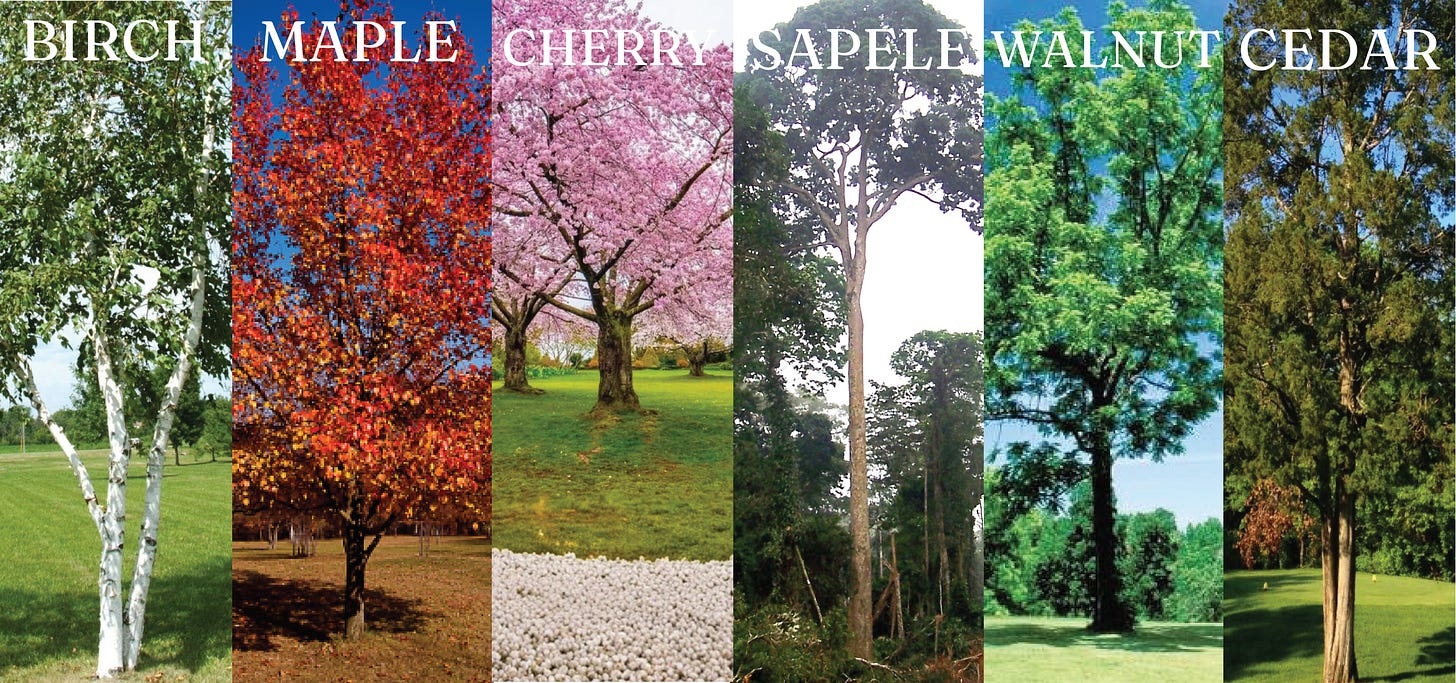
Why Wood?
Wood called to me as a young artisan, the way it feels like a body, the way it is living memory. No two boards have the same grain, just like snowflakes, just like people. I’m obsessed with the smell of it when it’s cut and I love the way wood deepens as it ages. I work with my laser because I love precision, safety, and a small studio. I work with wood because I love warmth, individuality, and materials that tell a story.
So let’s get into it. What wood species will you find in my studio?
Baltic Birch — the workhorse
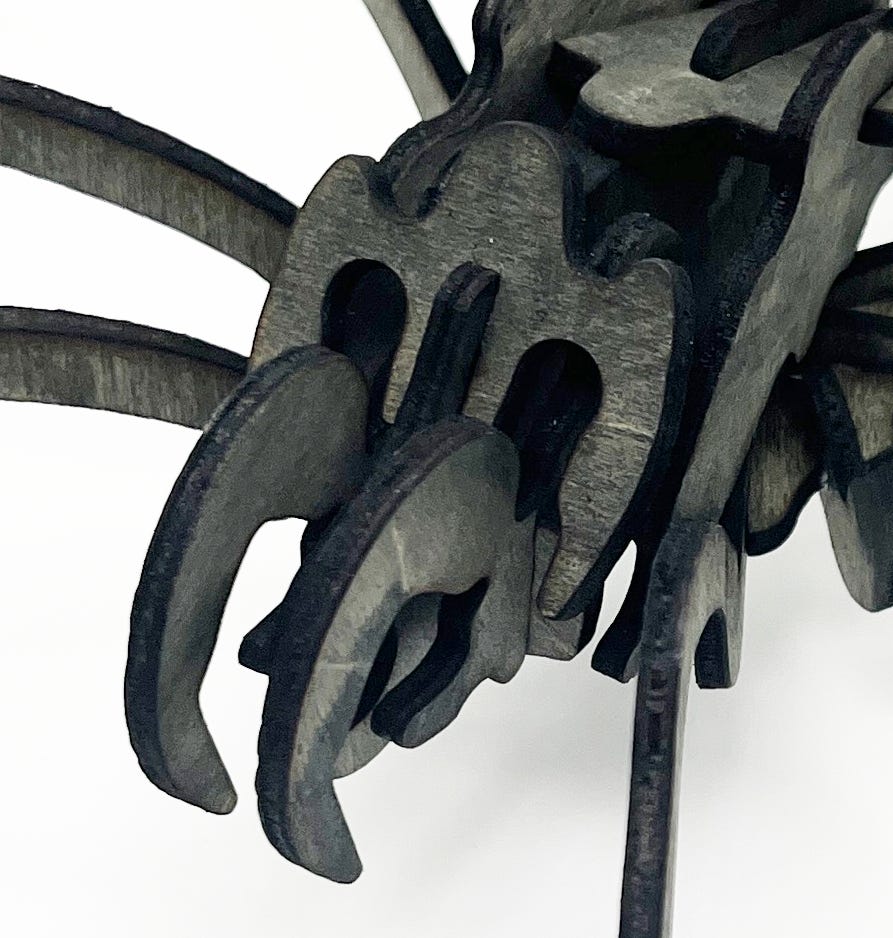
Baltic birch is the wood that lets the studio function. Inexpensive but stained black, it looks expensive in the blink of an eye — that's the secret from my woodworking bench, and a trick I use all the time. It has a fantastic wild pattern that comes out beautifully when stained and I personally think black is very classy. Baltic birch is softer than the other woods I work with and cuts smooth like butter on the laser. Very uniform fibers despite its wavy grain and very little resins or knots to interfere with the laser beam. This is the wood most of those laser cut built-it-yourself-kits are made out of. It smells faintly grassy when cut, almost like hay.
Matron, our laser-cut spider sculpture in the Nest collection, is built entirely from layered baltic birch — every leg, every joint, every body segment. You’ll find black stained birch as the web material on the Black Widow Sigil wall art.
Maple — my brightest canvas
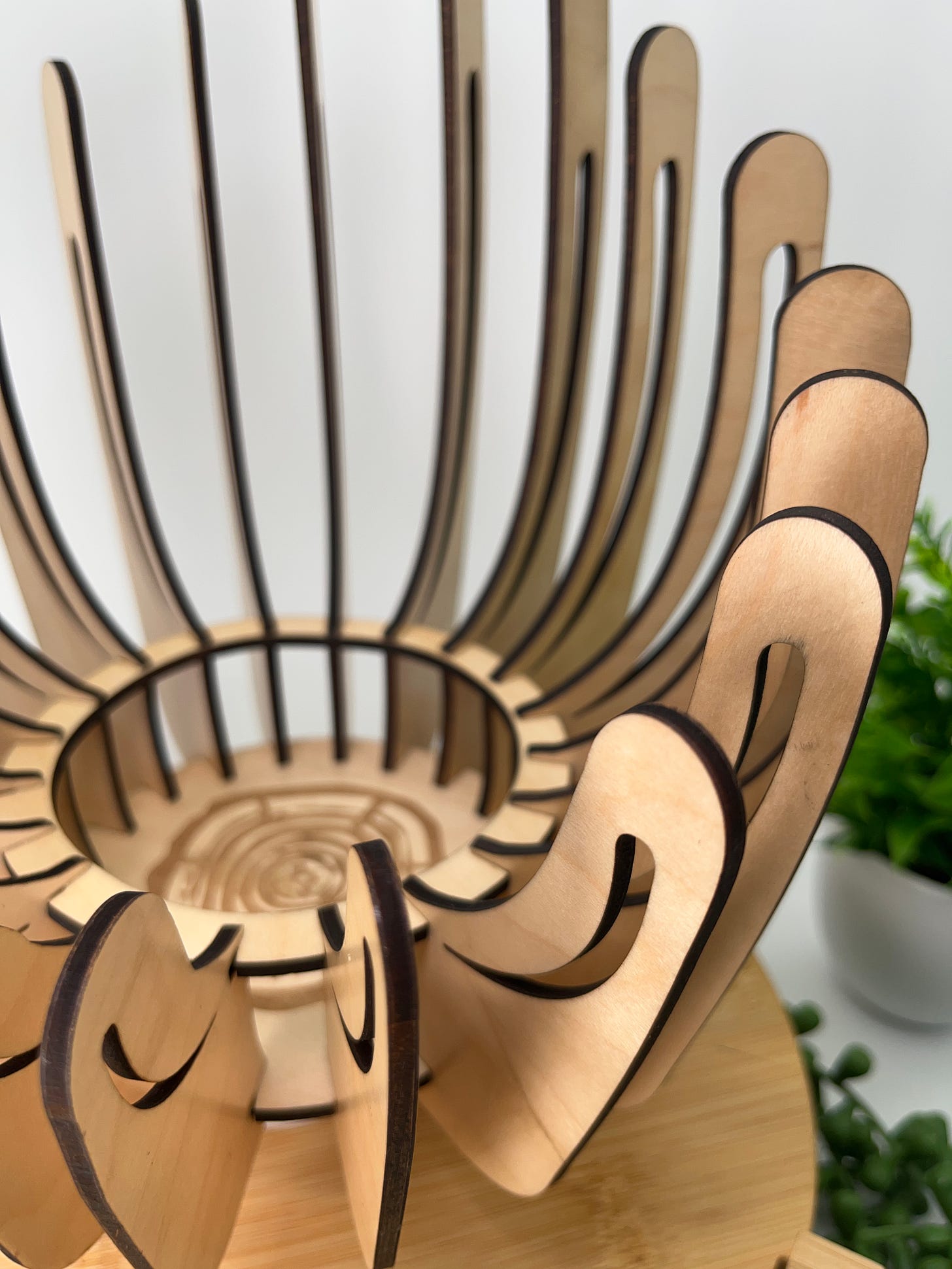
Maple has the finest and tightest grain of anything I use and is almost paper white. This is the wood I choose when I would have otherwise grabbed for titanium white in my oil paints, or want to let the background recede and the foreground shine. It is also great for giving an overall lightness and airiness to my sculptural pieces, I imagine my maple pieces in bathrooms or minimalist bedrooms. Also a reliable wood to cut on the laser, and is one of the most readable substrates for engraving.
The light variant of our Rorschach diptych is maple-background marquetry — the substrate disappears and the pattern speaks. Maple is also the cut-pattern layer behind each of our acrylic-finish Sigil pieces, including Seraph and Conduit.
Cherry — warm and surprising, the mood wood
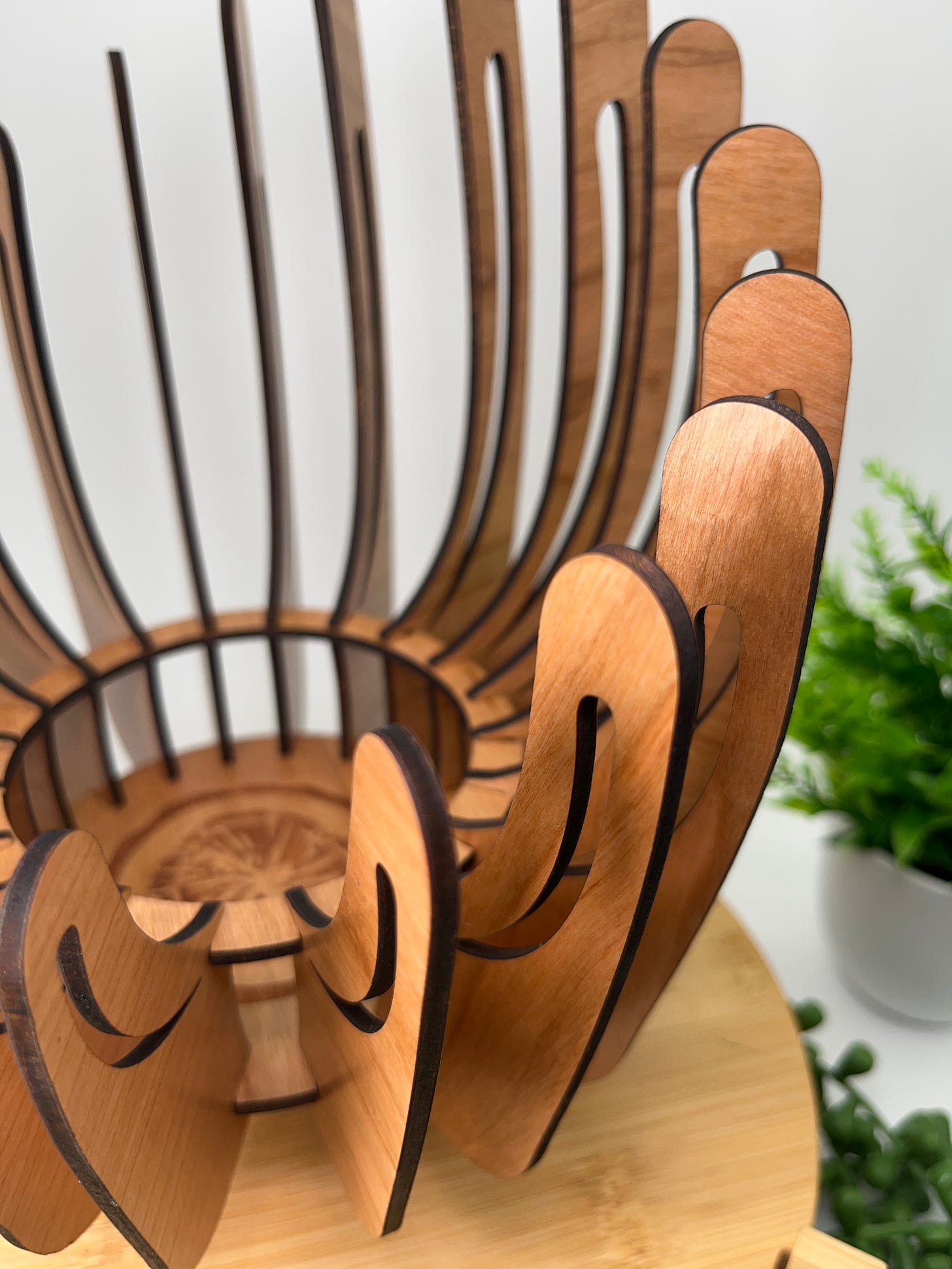
Just like the mood rings of childhood that shifted color as you wore them, cherry deepens — oxidizes really — with exposure to sunlight. It comes off the saw honey-pink, and over time it gets darker and darker, especially when exposed to the sun. Cherry also has wildly different grain patterns piece to piece, and even on the same piece with one side having wild wavy concentric circles and the other a tight grain running parallel like a river of wood.
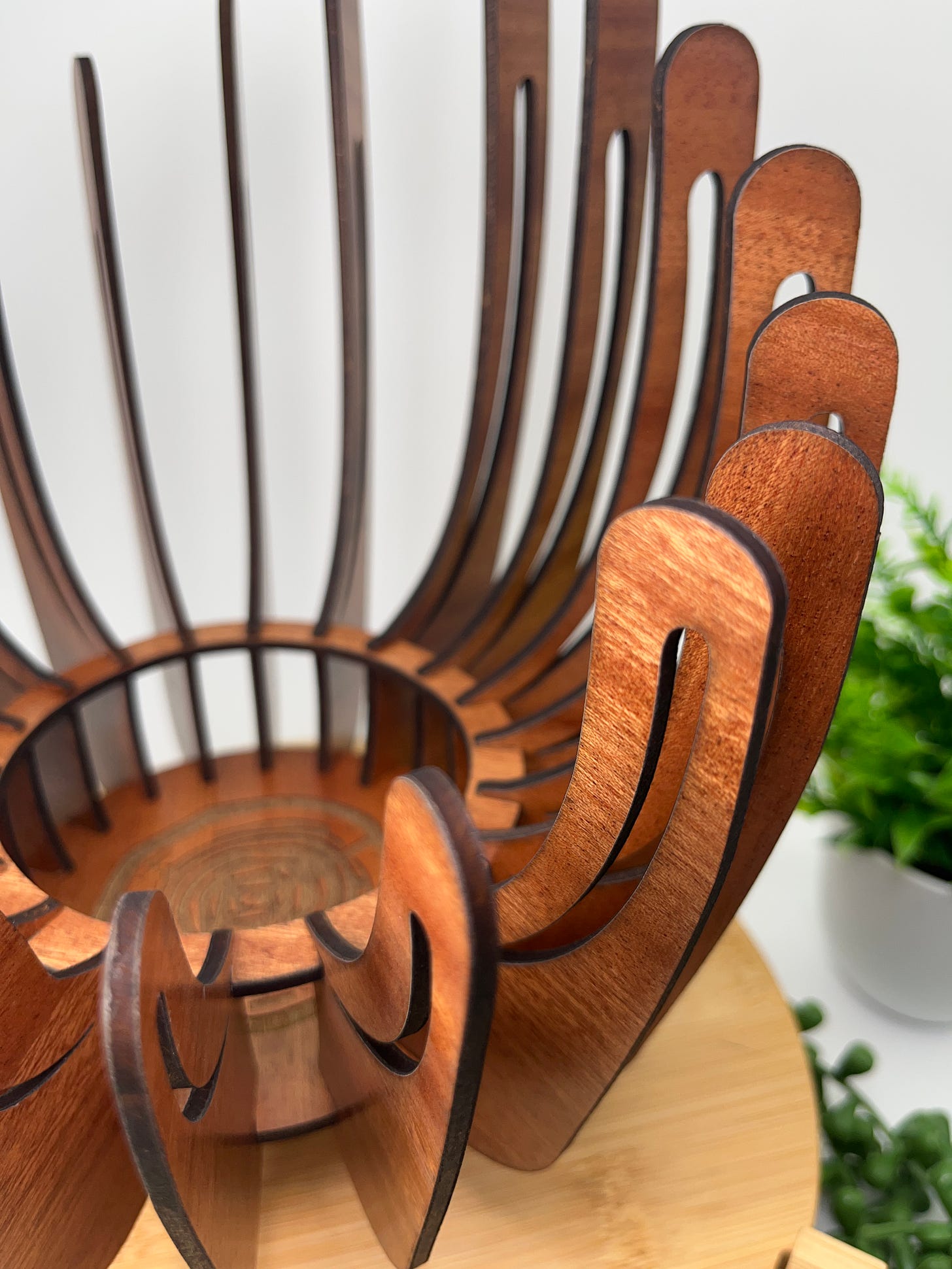
Sapele — The wood with chatoyance
Sapele is a hardwood from Africa, known for being very similar to mahogany. It is a deep bright red brown that sings in the sunlight, almost going electric orange with the natural chatoyance the wood has. This is a French word for the glitter-like shimmer throughout the grain that shines in the light like diamonds. The sapele is a show-stopping wood to work with, but it is a little stubborn under the laser so it requires extra care.
Sapele is the dark wood in Shock, our marquetry mask in the Inlay collection — the figure reads the way it does because sapele holds the line and catches the room light in stripes.
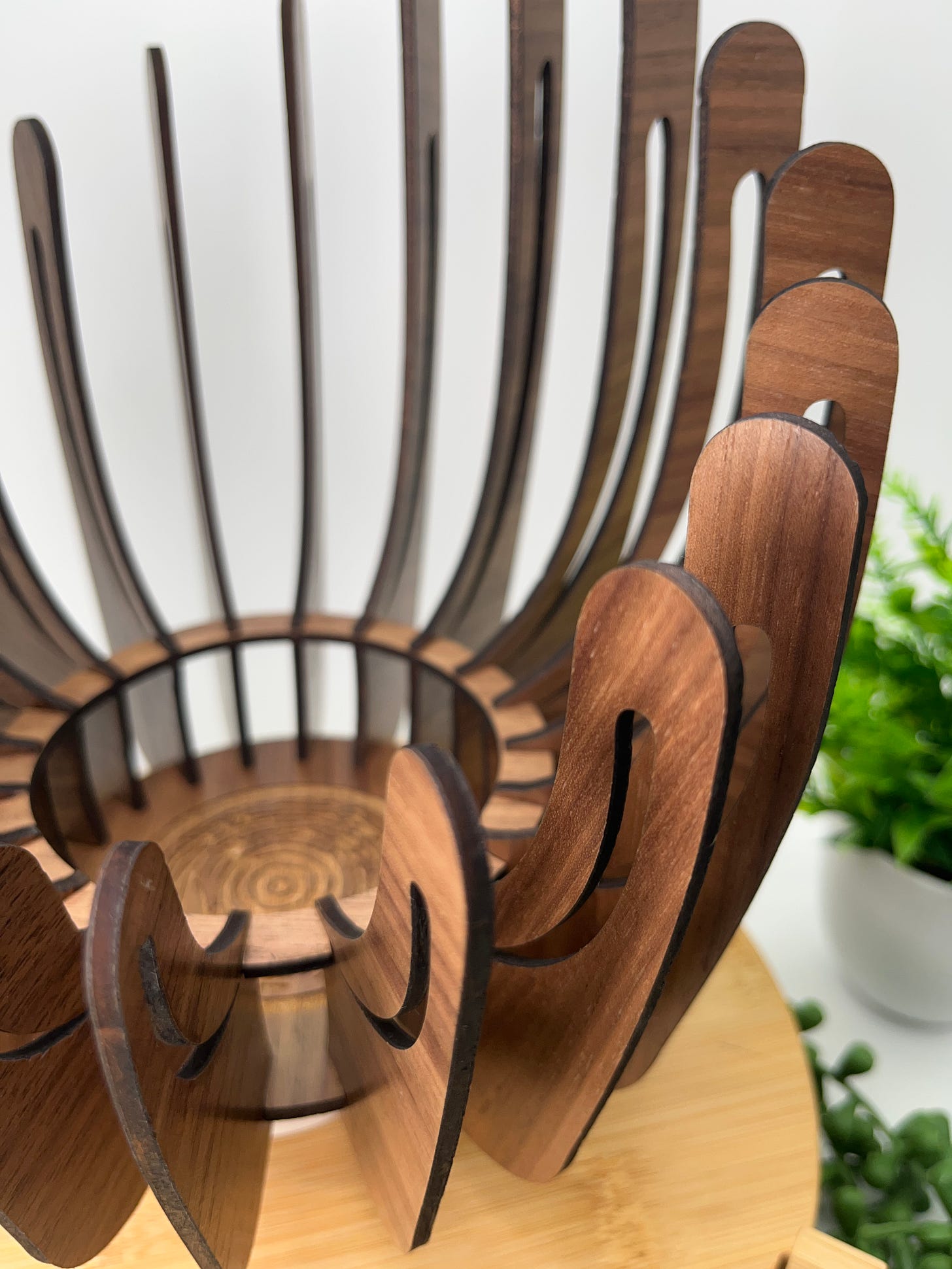
Walnut – the American classic
Walnut is a classic American hardwood. I’ve been lucky enough to put my hand against the trunk of a walnut tree. It is a cool chocolate brown with undertones of blue and purple, it it has dark grain striations and rich figuring that instantly elevate anything else near it.. Walnut, though being a hardwood, has very uniform grain and fiber so cuts beautifully on the laser. Each walnut piece I make really feels like a prized possession in the making. Walnut is the wood on my table that everyone immediately recognizes.
Walnut shows up across our catalog — the walnut variation of our Hearth Altar Bowl, the Spiral Reliquary, the dark base of our Rorschach diptych, and beneath several pieces in the Sigil series. It's the wood my eye keeps coming back to.
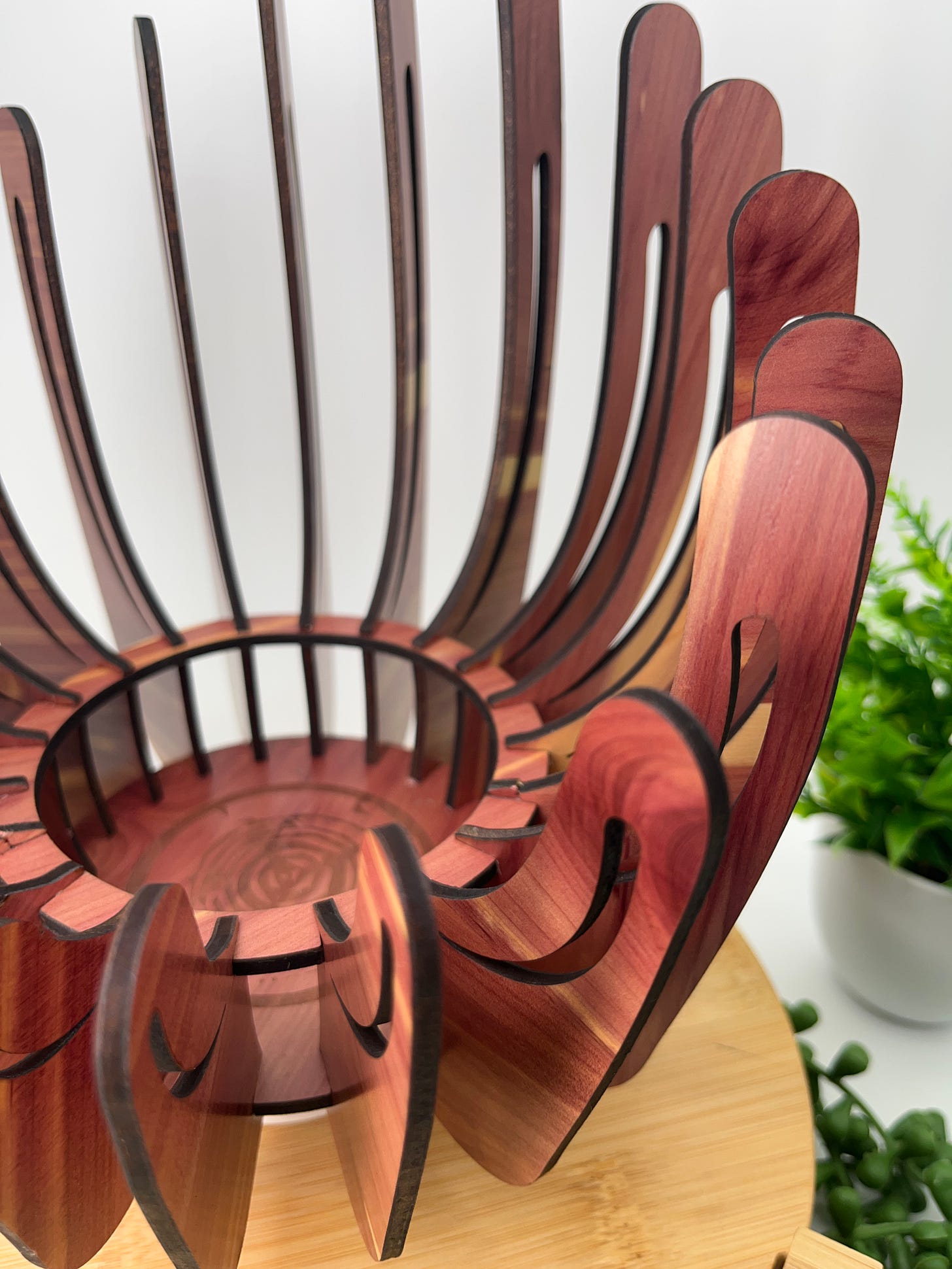
Aromatic Cedar — the wood that smells as good as it looks
Pink-red with cream streaks, knots and resins throughout. The wood you can smell just by looking at it. Each time I use it in a piece it does so much work with just its own natural patterning. Each piece of cedar I work with is like an already finished canvas I am deconstructing for parts. The finished pieces I work with still carry a scent months after they are made, and although it is my toughest wood to cut with by far, it is so worth it for the individuality each sheet of cedar brings to my work.
Cedar is one of the woods we're cutting our Altar Discs from for the June 26 drop — when those listings go live, what you'll be looking at is the scent of our studio rendered as object. You’ll find cedar alongside either cherry for a light contrast, or black-stained maple for dark contrast
— Jack Danger & AYOHWIN
🐀<3🐀
0 comments